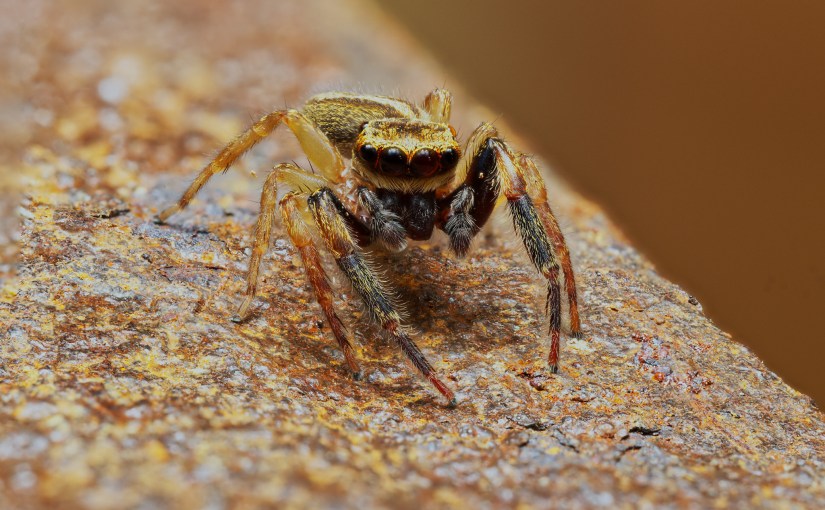
Trite auricoma
Every beginner macro photographer needs a jumping spider photo. This one was living in the shed on a high shelf. The yellow “moustache” below the eyes identifies it as an adult male. He is about 10 mm long and is exclusively a predator. Young jumping spiders like to try out various prey species- it’s said they will eat a slater, but only once. This adult has probably become quite choosy.
Trite auricoma is endemic and very common. They are lots of fun to observe as they like analysing people and will often stay still to do so. They have excellent eyesight and will size up a prey animal, devise a position and method to attack from, and implement the plan according to what the set-up will allow.
If you search “BBC Earth jumping spider” or “Thomas Shahan jumping spider” on YouTube you will find wonderful videos of some foreign jumping spiders. It’s a line call as to whether David Attenborough or Thomas Shahan has the most calming voice.


 Fauna Recovery New Zealand